
capture the daylight

Real dangers. Dealt as cards.

Things that will kill you

Overview

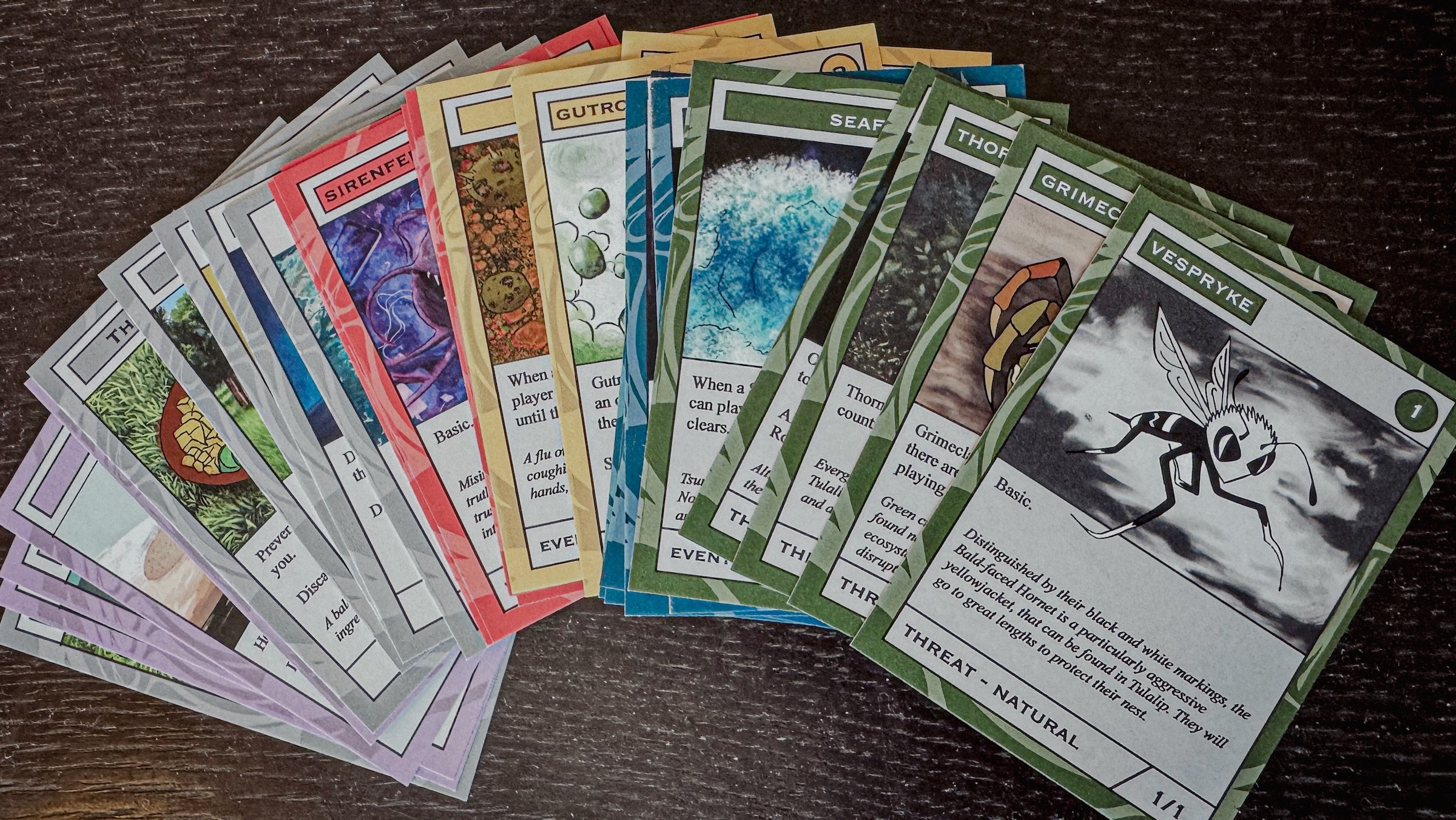
Things Will Kill You is a 2-player survival card game built around something we all deal with every day — the world trying to knock us down. Bears, bad weather, stress, the flu, a little too much lead paint — life comes at you from all directions. The goal of this game is simple: outlast your opponent.

Each player starts with 10 Health Points and a deck full of real-world dangers. You’ll take turns playing cards, making smart decisions, and reacting to whatever your opponent throws at you. The last player standing wins.

If you’ve ever played a trading card game before, you’re going to feel right at home. And if you haven’t — this is a great place to start.

Why Tulalip?

it’s more than a fun card game

This game was brought to the Tulalip community with one idea at its heart: that learning can feel like play.

Things Will Kill You isn’t just a card game — it’s a conversation starter. When a kid flips over a card about waterborne illness, or stress, or a car accident, it opens a door. Suddenly health and wellness aren’t abstract topics in a classroom — they’re part of the game. They’re something to think about, talk about, and yes, strategize around.

Tulalip has always been a community that looks after its own. This game is a small way of supporting that — giving kids a fun, engaging tool to learn about the dangers in the world around them, while also giving families and community members something to play together. It’s designed to be picked up at any age, shared across generations, and enjoyed by anyone who’s ever looked at the world and thought — yeah, there’s a lot out here trying to get me.

Whether it’s played at home, at a community event, or with friends after school, Things Will Kill You is for the Tulalip community, made to be played together.

How the game works

the basics

Two players face off, each starting with 10 HP. You play cards, attack your opponent, defend yourself, and try to be the last one standing. Each player should always have 4 cards in hand — draw back up to four at the end of every turn.

The round you’re on determines what cards you can afford to play. Every Threat Card has a cost, and the total cost of the cards you play in a turn can’t exceed the current round number.

Example: On Round 5, you could play a cost-2 and a cost-3 card, or a cost-1 and a cost-4 — as long as the total doesn’t go over 5.

the playing field

best for beginners

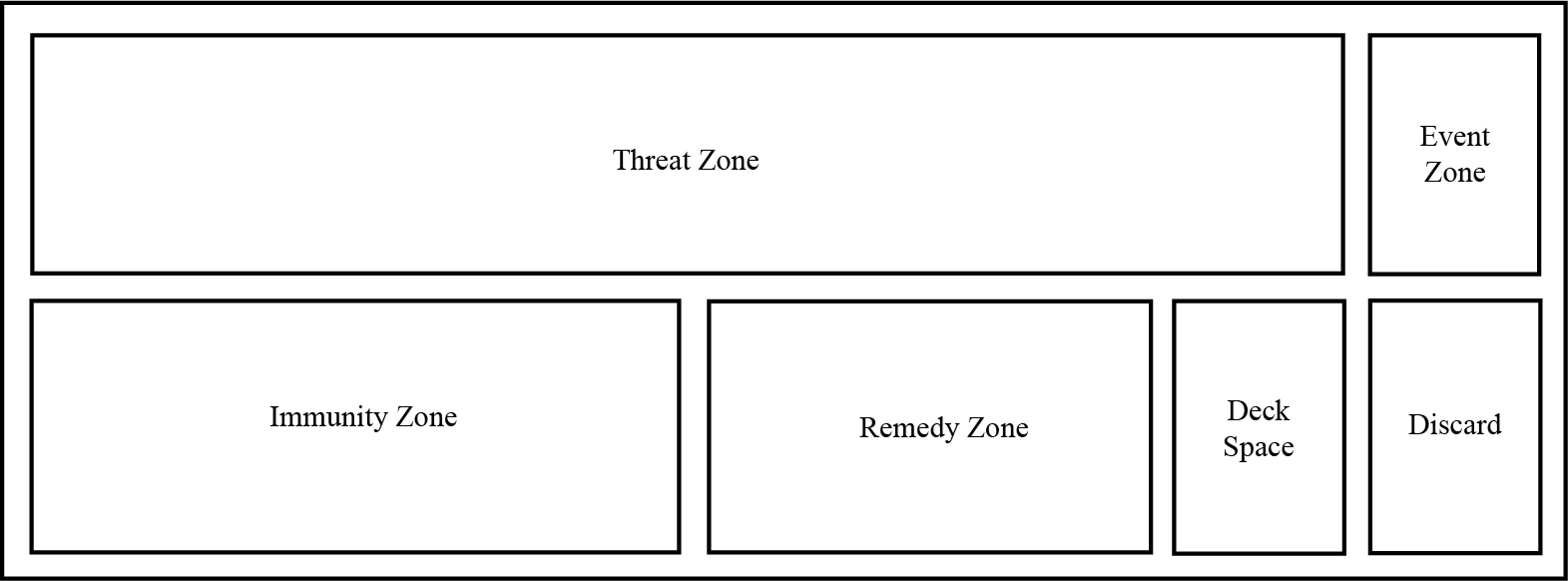
You don’t need anything special to play — a flat surface works just fine. But if you’re just starting out, setting up a dedicated playing field can make the game a lot easier to follow. It helps both players keep track of what’s on the board and makes sure nothing gets mixed up mid-game.

The field is divided into six zones:

  • Threat Zone — where your active Threat Cards live once you’ve played them
  • Immunity Zone — where your Immunity Cards wait until you’re ready to use them
  • Event Zone — where active Event Cards are placed when in play
  • Treatment Zone — where Treatment Cards briefly land before taking effect and being discarded
  • Deck — your draw pile, face down
  • Discard Pile — where used and destroyed cards go

Each player has their own set of zones on their side of the field, facing their opponent. Once you’ve played a few games you’ll probably have it all memorized — but for your first few rounds, having a laid out field makes a big difference.

THREAT CARDS

Threat Cards are your attackers. Play them onto the field, and after they’ve been there for one full round, they’re ready to fight. They can damage your opponent directly, take out their Threat Cards, or step in front of an attack headed your way.

Every Threat Card has its own HP. When a card takes enough damage to hit zero, it’s gone.

Immunity Cards are your shields. Play one onto the field during your turn and it waits in your Immunity Zone until you need it. Once you activate it, it blocks or reduces incoming damage — then it’s discarded. Some cover all damage, some only work against specific threats, so read carefully before you commit.

Treatment Cards are how you recover. Play one, the effect kicks in immediately, and then it’s discarded. They can heal your own HP or patch up a Threat Card that’s taken a beating. Just remember — your HP can never go above 10.

Treatment Cards can also be played during your opponent’s turn, giving you a chance to respond in the middle of an attack.

Event Cards shake things up for both players at the same time. They can change the rules of the game for a few rounds and keep things interesting.

Two important rules: Event Cards can’t be played until after Round 3, and if you draw one after Round 3, you have to play it on your very next turn — no holding onto it.

Deck colors

Start with one. Master the game, then mix and match to customize your deck.

Every deck is built around one category of real-world danger. Pick the one that speaks to you.

  • 🟡 Yellow — Microscopic: Flus, viruses, waterborne illness — tiny things with a big impact.
  • 🔵 Blue — Mental: Stress, poor sleep, seasonal depression — the threats you can’t always see.
  • 🔴 Red — Human-Made: Car accidents, pollution, lead paint — dangers people created.
  • 🟢 Green — Natural: Bears, bees, tsunamis — the wild world doing its thing.

Start with one color and learn what it can do. Each deck has its own personality and playstyle.

turn flow

here’s how a turn works

  1. Play an Event Card (if you have one and it’s Round 4 or later)
  2. Play Immunity and Treatment Cards
  3. Play Threat Cards (based on what you can afford this round)
  4. Attack — declare who your Threat Cards are targeting
  5. Your opponent reacts — block with a Threat Card or play a Treatment Card
  6. Resolve — figure out what’s discarded and how much HP was lost
  7. Draw back up to 4 cards
  8. Pass the turn

No attacks on Round 1 — that first round is all about getting set up.

watch it in action

Step by step

The best way to understand the game is to see it played. Watch a full game between two players — ten rounds, tough decisions, and a whole lot of things trying to kill them.

Scan the QR code on your card insert, or click the link below, to watch the full gameplay tutorial.

what’s next

customization

One of the best things about Things Will Kill You is that it grows with you. Once you’ve learned one deck inside and out, the real fun begins — mixing colors, building a custom hand that plays to your strengths, and finding combinations that catch your opponent off guard.

The game is designed to expand. New dangers, new strategies, new ways to play. The deeper you go, the more there is to discover.

Things Will Kill You is for everyone. Pick up a deck, find your opponent, and may the healthiest player win.

Now there is no one who could catch up with us.

There is something you can do.
Strong community connections are key to addressing this crisis. When neighbors and local groups unite, they create a support network that can identify and help those at risk. Small acts—checking in, sharing resources, offering support—make a real difference. These connections don’t just help in emergencies; they build resilience and prevent addiction from taking root.

Sign up here for updates and to get involved in our outreach campaigns! 

Scroll to Top